
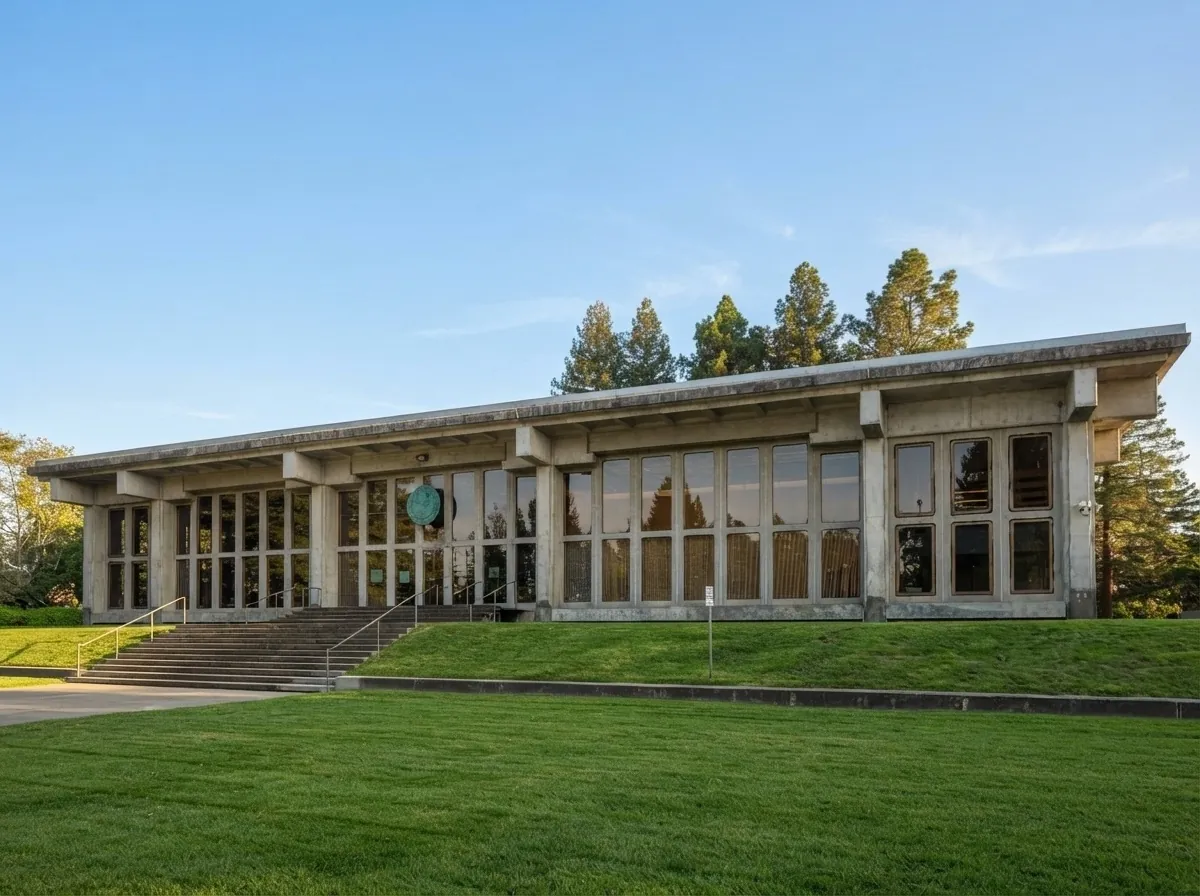
Court records in Santa Cruz County, California, are maintained by the County Superior Court Clerk and are accessible through online tools, official court portals, and directly at the court clerk's office. SantaCruzCourt.us helps find public information about court records in this county. Additional resources include the online case lookup for the Superior Court, the court's records and information division, and the county recorder's office.
Santa Cruz Court System Overview
Santa Cruz County is served by the Superior Court of California, County of Santa Cruz. Since 1998, California has had a unified trial court system—each county has one Superior Court that handles all case categories. The court operates in two buildings:
Both locations are open to visitors on business days. General information, hours of operation, and updates can be checked on the official court website. The court is part of California's Sixth Appellate District, and appeals from this court are directed to the Sixth District Court of Appeal in San Jose.
Courts Serving Santa Cruz
Residents of the county are served by several judicial instances of different levels of jurisdiction.
State Court
Federal Court
Santa Cruz County falls under the jurisdiction of the U.S. District Court, Northern District of California. The nearest federal court is located in San Jose:
Bankruptcy cases are handled by the Bankruptcy Court of the Northern District of California in the same city.
What Types of Cases Santa Cruz Courts Hear
The Superior Court of Santa Cruz County is a court of general jurisdiction. Here are the main categories of cases heard:
- Criminal cases: felonies, misdemeanors, infractions
- Civil lawsuits: general civil cases, small claims
- Family law: divorce, custody, child support, paternity
- Probate: inheritance, guardianship, conservatorship, trusts
- Juvenile matters: juvenile offenses, child protection, adoption
- Traffic violations and DUI
More details on each category are in the following sections.
District Court Cases in Santa Cruz
California does not have a separate district court at the state level—the Superior Court performs all trial court functions. Serious criminal cases (felonies) begin with a preliminary hearing where a judge determines if there is enough evidence to proceed to trial. After this, the case moves to the trial stage.
Civil cases with claims over $25,000 fall into the "unlimited civil" category and are heard in full procedure. A judge is assigned according to the court's internal distribution. Appeals from Superior Court decisions are filed with the Sixth District Court of Appeal.
Magistrate Court Cases in Santa Cruz
California does not have separate magistrate courts. Instead, the Superior Court handles all cases, including those that in other states would fall under the jurisdiction of a magistrate judge:
- Misdemeanors and infractions — minor offenses, public order violations
- Preliminary hearings for felonies
- Civil cases with limited jurisdiction — claims up to $25,000 (category "limited civil")
- Small claims — up to $10,000 for individuals
- Traffic violations and DUI
Small claims cases are heard without attorneys—the parties represent themselves. For business claims, the small claims limit is $5,000.
Family Law, Probate, and Juvenile Matters in Santa Cruz
Family Law
Divorce, custody distribution, child support orders, protective orders, and paternity establishment are all handled by the family law division of the Superior Court. For divorces that occurred in the county, records can be requested through the Recorder's Office page on divorces and wills or directly through the court's records division.
Probate
Inheritance cases, minor guardianship, conservatorship, and trust management are handled by the probate division of the Superior Court. Wills filed with the court become part of the court records.
Juvenile Matters
Records in juvenile cases are confidential under California law. Cases involving juvenile offenses and child protection (Child Protective Services) are heard in closed sessions. Access to such records is strictly limited.
How Cases Move Through the Santa Cruz Court System
- Filing a case. A criminal case begins with a prosecutor's complaint; a civil case with a plaintiff's complaint; a family or probate case with a petition.
- Judge assignment. The case is assigned to a specific judge according to the court's internal rules.
- Initial hearings. In criminal cases—arraignment (first hearing where charges are presented). In civil cases—planning conference.
- Pre-trial stage. Motions, evidence exchange (discovery), plea negotiations, or settlement discussions.
- Trial or resolution. The case may end with a plea, jury verdict, settlement, or default judgment.
- Post-judgment. Sentencing, filing an appeal, or enforcing the judgment.
The status of a specific case can be checked through the online case lookup—just enter the full or partial name of a party.
Court Administration, Local Rules, and Public Access in Santa Cruz
The administration of the Superior Court of the county is carried out by the Presiding Judge along with the Court Executive Officer. Local court rules are published on the Superior Court website.
Regarding public access to records—California adheres to the principle of open court records. According to the California Rules of Court and the California Public Records Act, most court documents are publicly accessible. Exceptions:
- Juvenile case records
- Sealed or confidential cases
- Certain family law documents
- Records protected by court order
General rules for access to court records at the state level are described on the Judicial Branch of California page. Hearings are usually open to the public. Some sessions are held remotely—check the schedule on the court's website or call (831) 420-2200.
Court Records and Related Court Resources in Santa Cruz
- Online case search: Case Lookup allows searches by party name or case number.
- Court records and information division: Records & Information — here you can order copies of court documents, learn about expungements, and get reference information.
- Official county records: Official Records Inquiry — search the county recorder's database (deeds, wills, marriage licenses).
- County Recorder: Santa Cruz County Recorder's Office maintains marriage licenses, birth certificates, and other official documents.
- Criminal history: To obtain your own criminal history, contact the California Department of Justice — you need to submit fingerprints and pay $25.
- Local jail inmate search: Web Jail Viewer of the county sheriff allows checking information about individuals in local detention.
- State prison inmate search: CIRIS (California Incarcerated Records & Information Search) — tool of the California Department of Corrections.
- Sheriff's public records: Requests for sheriff's office records are submitted through the NextRequest online portal.
- Property assessment: County Assessor's Office provides information on land parcels and property assessment.
- Property tax payment: County Tax Collector accepts payments online, by mail, or in person.